
The Quiet Infrastructure of Opportunity: Why Digital Resilience Matters for Botswana Today

Over the past decade, Botswana has steadily embraced a more connected way of living and working. What was once considered optional — reliable internet, secure digital systems and cloud-based tools — has increasingly become part of the everyday fabric of economic and social life. From students attending online classes to entrepreneurs selling products through social media, the digital environment now plays a central role in how opportunities are created and accessed.
Yet the rapid pace of this transition has also revealed an important reality: digital participation is only as strong as the infrastructure that supports it.
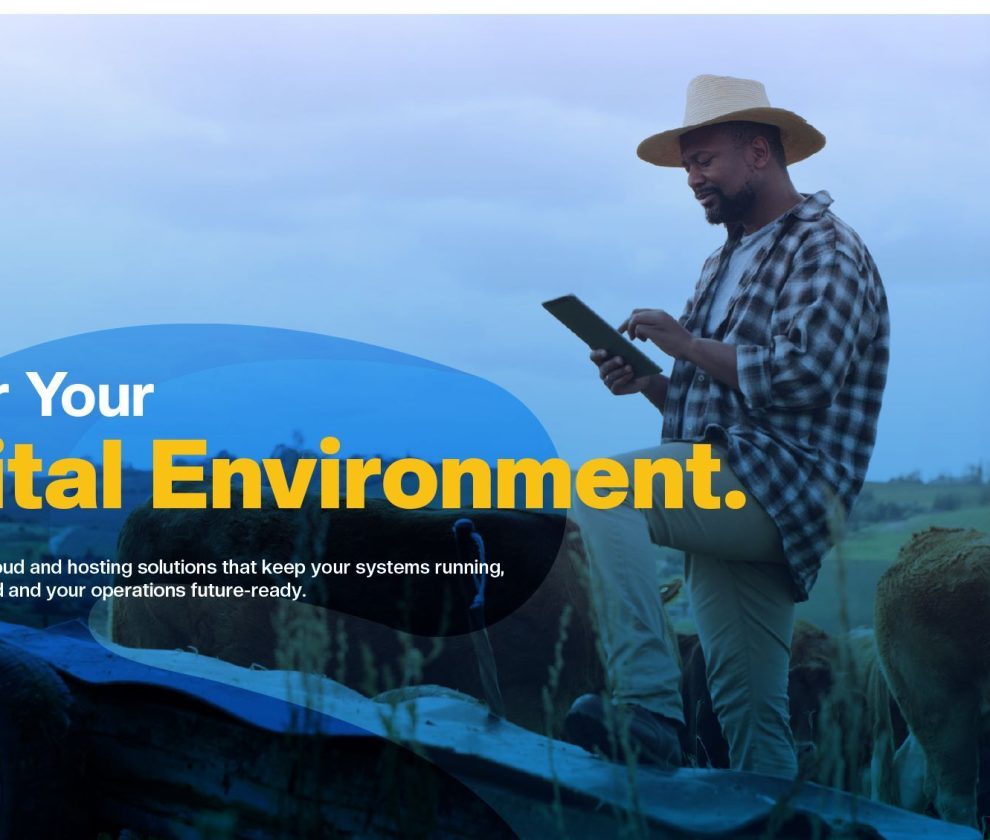
For many ordinary Batswana, the digital economy is no longer an abstract concept. It is visible in the small but significant ways daily life has changed. A farmer might now rely on messaging platforms to coordinate supply chains. A graduate searching for employment submits applications online. A small retailer may use mobile payments and social media advertising to reach customers beyond their immediate neighbourhood.
In many ways, this digital shift has opened doors that did not exist before.
However, it has also introduced new challenges that are not always visible on the surface.
Across the world, economies are navigating a period of uncertainty. Rising living costs, fluctuating global markets and geopolitical tensions continue to shape economic conditions in ways that affect even relatively stable countries. Businesses are under pressure to operate more efficiently, households are seeking ways to stretch resources further, and governments are increasingly exploring how digital systems can improve service delivery.
In this environment, the ability to operate digitally is no longer simply a convenience — it has become a form of economic resilience.
For Botswana, this reality presents both opportunity and responsibility. As the country continues to pursue economic diversification and knowledge-driven growth, digital capability will play an increasingly central role. But building that capability requires more than access to devices or internet connections. It requires the systems that make digital participation reliable, secure and sustainable.
Consider the experience of a small business owner in Gaborone attempting to manage customers, suppliers and finances online. When connectivity is inconsistent, productivity slows and transactions become uncertain. When digital systems are not adequately protected, sensitive information can become vulnerable to cyber threats. And when organisations rely on outdated infrastructure, scaling operations becomes difficult.
These challenges are not unique to Botswana. They are being experienced across both developed and developing economies. Yet their impact can be particularly pronounced in smaller markets, where businesses and individuals are often navigating the digital environment without extensive technical support.
Cybersecurity offers a clear example of this growing concern.
Globally, cyber threats have become more sophisticated and more frequent. Attacks that once targeted only large corporations are now increasingly directed at small and medium-sized enterprises. In many cases, these organisations assume they are unlikely targets, only to discover that cyber criminals often look precisely for systems that are less protected.
A single phishing email, compromised password or unprotected device can expose an entire network.
For individuals, the risks are equally real. Online fraud, identity theft and scams have become part of the digital landscape. While digital tools enable convenience and access, they also require a new level of awareness and protection.
This is why conversations around digital infrastructure must extend beyond speed or connectivity alone. Reliability, security and resilience are equally critical.
Another important shift shaping the digital environment is the movement towards cloud-based systems. Increasingly, businesses and institutions are moving away from maintaining physical servers and localised data storage. Instead, they are adopting cloud environments that allow systems and information to be accessed securely from anywhere.
This shift has significant implications for productivity and efficiency. Employees can collaborate across locations, businesses can scale operations without investing heavily in hardware, and organisations can maintain stronger backup and recovery systems.
However, cloud adoption also introduces questions around governance, reliability and security. Without the right safeguards, moving operations online can create new vulnerabilities rather than reducing them.
For many organisations, particularly small and medium-sized enterprises, the challenge lies not in recognising the importance of digital transformation but in navigating the complexity that accompanies it.
Digital systems today encompass far more than internet access. They involve interconnected networks, data management, cybersecurity frameworks and cloud infrastructure. Managing these elements effectively requires specialised knowledge and continuous monitoring.
This is where the concept of digital resilience becomes important.
Digital resilience refers to the ability of systems, organisations and individuals to operate reliably in a connected environment while managing risks and adapting to change. It is about ensuring that technology supports growth rather than becoming a source of disruption.
In Botswana’s evolving economic landscape, digital resilience will increasingly determine which organisations are able to adapt and which struggle to keep pace.
For entrepreneurs and small businesses, resilient digital systems can open pathways to new markets and customers. For institutions such as schools and healthcare providers, they enable more efficient service delivery. And for individuals, they provide access to information, employment opportunities and financial services that might otherwise remain out of reach.
But building digital resilience requires a collective approach. Policymakers, businesses, technology providers and communities all have roles to play in ensuring that digital systems are inclusive, reliable and secure.
Encouraging digital literacy, strengthening cybersecurity awareness and investing in robust infrastructure are all part of this broader effort.
Equally important is recognising that technology should ultimately serve human progress. The purpose of digital systems is not simply to modernise operations but to expand opportunity, improve efficiency and enable people to participate more fully in the economy.
Botswana has long been recognised for its stability, strong institutions and forward-looking development strategies. As the country continues to embrace digital transformation, maintaining these strengths in the digital sphere will be essential.
The future of economic participation will increasingly depend on the quiet infrastructure that supports our connected lives — the networks, platforms and systems that operate largely out of sight but shape how we learn, trade, communicate and innovate.
For many Batswana, the digital economy has already begun to redefine what is possible. Ensuring that this opportunity remains accessible, reliable and secure will determine how fully the country is able to realise its potential in the years ahead.
In the end, digital transformation is not only about technology. It is about building systems that allow people, businesses and communities to navigate a rapidly changing world with confidence.
And in a world where uncertainty has become a constant, that confidence may prove to be one of the most valuable forms of infrastructure any society can build.